
Adaptation
So, what do finches have to do with business success?
Quite a lot, actually.
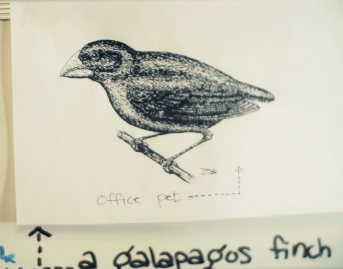
Darwin studied the finches of the Galapagos Islands carefully, and made predictions about their future adaptation and ability to succeed.
He was brilliantly right. The finches, he predicted, would have to adapt to survive in an environment of change. Twentieth-century scientists delivered proof he was correct.*
What’s that got to do with your business?
Plenty. In the last ten years, even the last five years, there have been profound, Darwinian changes in the behavior of decision makers, and the communications channels where buyer and seller might connect. A majority of companies have not fully embraced adaptation to these new realities such as the emergence of marketing automation or the power of social media. Have you? Have your competitors?
Buyers are now in charge of all transactions, and they do not want to hear what you’re selling.
Your prospects have learned to avoid sales pitches so thoroughly, it is less and less cost-effective every year to “push” any message that even resembles an ad. Response to print ads are in decline. They listen to iPods, not radio. DVRs, voice mail, spam filters prevent contact. Sure, ten years ago a consumer might have used the Yellow Pages, but nobody under 70 does today. Yes, a purchasing agent might have found you in a printed directory then, but today, if your website doesn’t come up on her smartphone, you can and will lose sales.
We adapted. We evolved.
We went from ad agency to branding agency, realizing that advertising is now just one tactic among many, not a cure-all. Adaptation demanded it: the communications mix is more complex than ever.
Is your brand active on social networks, for example?
You’d better. We’re just sayin’. Some of the tactics that can work effectively for your brand today (that is, open a dialog with your best prospects) didn’t even exist a few years ago: Twitter, iPhone apps, targeted prayer. (We just invented one of those.)
It’s a jungle out there.
Adaptation demands difficult changes and decisions. (We can help.)
Let's do launch
Evolve your brand for exponential growth
In today’s digital jungle, your brand must adapt. Before your competitors do.
Take action

Evolve